
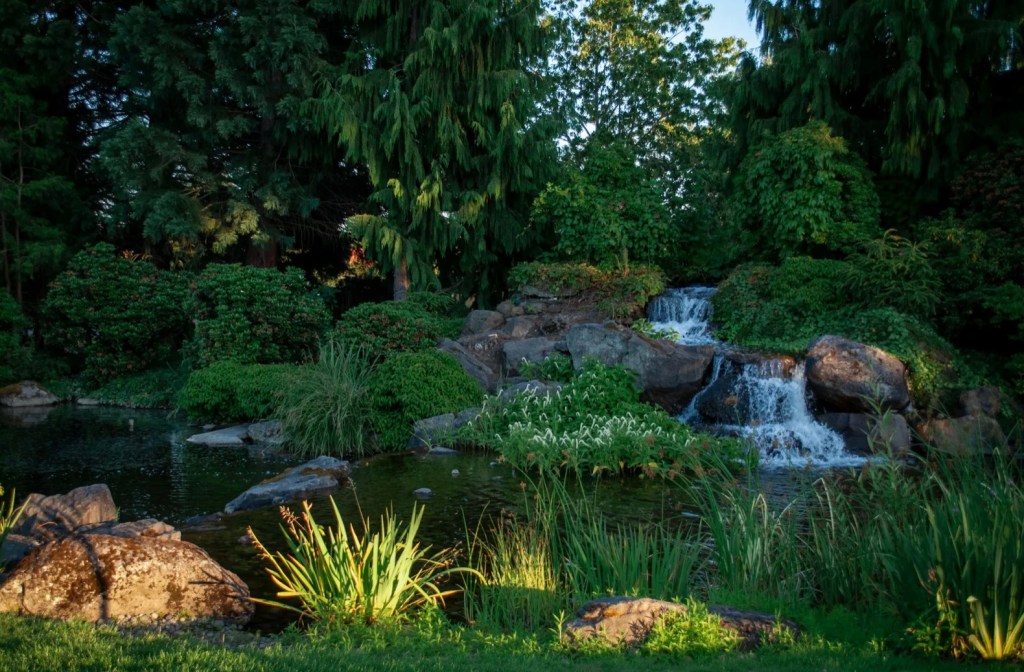
Creating a serene backyard pond can transform your outdoor space into a tranquil oasis, offering a peaceful retreat and a habitat for various forms of wildlife. The process begins with planning your pond’s size, location, and design.
Choose a spot that gets at least 4-6 hours of sunlight daily and is away from trees to minimize leaf debris.

Once you’ve selected the location, outline the pond’s shape with rope or spray paint. Excavation follows, digging to your desired depth and width, keeping in mind to create shelves around the perimeter for plants.

After digging, line the hole with a quality pond liner to prevent water from seeping into the soil, and then fill your pond with water. Adding a pump and filtration system is crucial to keep the water circulating and clean, which will be beneficial for any plants and wildlife you introduce.

Maintaining your backyard pond ensures its beauty and health over time. Regular maintenance tasks include monitoring water levels, especially during hot weather, to keep the pond from drying out. Installing a filter system plays a significant role in keeping the water clear, but it’s important to clean the filter regularly according to the manufacturer’s instructions.

Managing algae growth is another critical aspect, which can be controlled by limiting direct sunlight with aquatic plants that provide shade and naturally filter the water, such as water lilies. Additionally, removing fallen leaves and debris weekly helps prevent the accumulation of organic matter, which can fuel algae growth and degrade water quality.
Skimmer nets are one of many essential pond cleaning tools and equipment necessary for optimal maintenance. This handheld tool lets you quickly and efficiently remove leaves, debris, and floating items from the water’s surface. Opt for a net with mesh to capture the minor debris and prevent it from sinking to the bottom, where they could pose additional cleaning challenges.

Seasonal maintenance is also vital for the longevity of your pond. In the fall, consider covering your pond with netting to catch falling leaves. Before winter, remove any tropical plants and trim back hardy plants. If your area experiences freezing temperatures, ensure there’s a hole in the ice for gas exchange; this can be achieved with a pond heater or an aerator.

Come spring, it’s time to clean your pond thoroughly by removing any debris that accumulated over the winter and checking the pump and filter system to ensure they’re functioning correctly. With consistent care, your backyard pond will flourish, providing a haven for you to enjoy the tranquil sounds and sights of nature right at your doorstep.
 Whole Earth Home