
Looking into how these clever cleaners get their job done.
They look like innocent little white sponges. No soap. No scent. No drama. Then they erase scuffs, crayon, grime, and mystery marks like your wall just hit undo.
So what is going on?
Magic Erasers are not really sponges. They are made from melamine foam, a material that acts less like a soft cleaner and more like extremely fine sandpaper. On a microscopic level, the foam is a hard, glass-like structure full of tiny open cells. When you wet it, those micro-edges get to work.
You are not dissolving dirt.
You are gently micro-scrubbing it off the surface.
Think of it as thousands of tiny scrubbers lifting grime from the peaks and valleys of a surface. That is why it works on things soap cannot touch, like sneaker scuffs, wall marks, and baked-on residue.
It also explains the weird part.
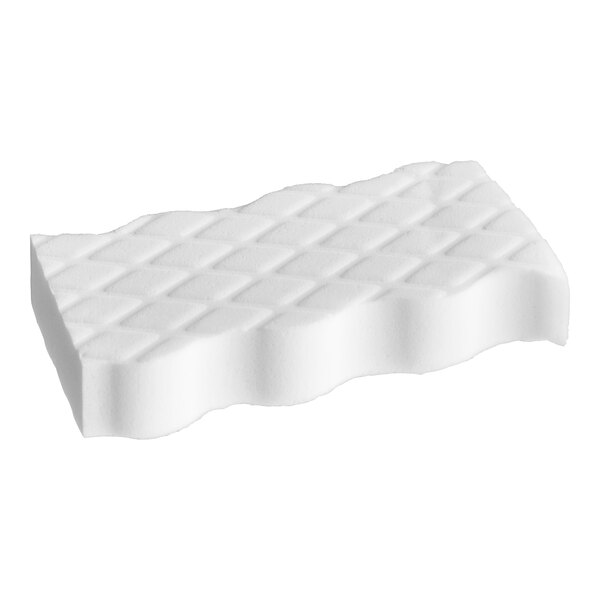
The eraser shrinks as you use it because it is literally wearing away, like a pencil eraser or very fine sandpaper. You are slowly sacrificing the foam to take the stain with it. Heroic, honestly.
But here is the eco-reality check. Because it works by abrasion, it can dull glossy paint, damage finished wood, or haze shiny surfaces. It is powerful, but not gentle in the way a cloth and cleaner are. And those little foam bits breaking off do not exactly scream sustainability.
Still, the appeal is obvious. No chemical cocktails. No harsh fumes. Just physics doing quiet, nerdy magic in your hand.
So no, it is not a miracle. It is materials science. But when a wall stain vanishes in two swipes, it definitely feels like one.

 Whole Earth Home