

Making your home more eco-friendly doesn’t have to mean a gut renovation or a five-figure solar installation.
Some of the most effective changes you can make are small, inexpensive, and surprisingly satisfying to do yourself over a weekend. Better yet, most of them pay for themselves within a year through lower utility bills. Here are seven simple upgrades worth doing sooner rather than later.

1. Switch to LED Bulbs Throughout the House
If you haven’t replaced all your bulbs with LEDs yet, this is the easiest win in the entire list. LED bulbs use about 75% less energy than traditional incandescent bulbs and last up to 25 times longer. For an average home, switching completely to LEDs can save $225 or more per year on electricity costs alone.
The upfront cost has dropped dramatically in recent years — you can pick up a multipack for a few dollars at any hardware store. Start with the fixtures you use most: kitchen overhead lights, the living room, and any outdoor lighting that runs for hours each night. It’s a one-afternoon project with years of payoff.

2. Install a Programmable Thermostat
Heating and cooling account for roughly half of most households’ energy use, and a programmable thermostat is one of the most effective ways to cut that number down. By automatically lowering the temperature at night or when you’re away from home, you can reduce your heating and cooling costs by up to 10% per year — which adds up fast.
Basic programmable thermostats start around $25 and take about 30 minutes to install if you’re comfortable with basic wiring. If you want something more hands-off, smart thermostats like the Ecobee or Google Nest learn your schedule automatically and can be controlled from your phone. Either way, this is a set-it-and-forget-it upgrade that keeps working year after year.
3. Seal Air Leaks Around Doors and Windows
Air leaks are sneaky. You might not feel a dramatic draft, but gaps around doors, windows, and electrical outlets can add up to the equivalent of leaving a window open all year long. According to the EPA, sealing air leaks can reduce heating and cooling costs by up to 20%. On a cold night, run your hand along the edges of your exterior doors and windows — if you feel cool air, you’ve found a leak.
The fix is simple: weatherstripping for door frames and caulk for gaps around window frames and baseboards. Both are available at any hardware store for a few dollars and require no special skills. While you’re at it, check the area where pipes and cables enter the house from outside — these are common culprits that are easy to seal with a foam spray or caulk.

4. Add Low-Flow Fixtures to Sinks and Showers
The average American household uses about 300 gallons of water per day, and a significant chunk of that goes down the drain in showers and sinks. Low-flow showerheads and faucet aerators can cut that usage by 30 to 50% without any noticeable difference in pressure — modern low-flow fixtures are a far cry from the weak trickles of older designs.
Replacing a showerhead takes about ten minutes and a pair of pliers. Faucet aerators simply screw onto the end of your existing faucet — you can swap one out in under a minute. Look for fixtures with the WaterSense label, which means they’ve been independently certified to meet EPA water efficiency standards. For a two-person household, this upgrade can save thousands of gallons a year.
5. Insulate Your Hot Water Pipes
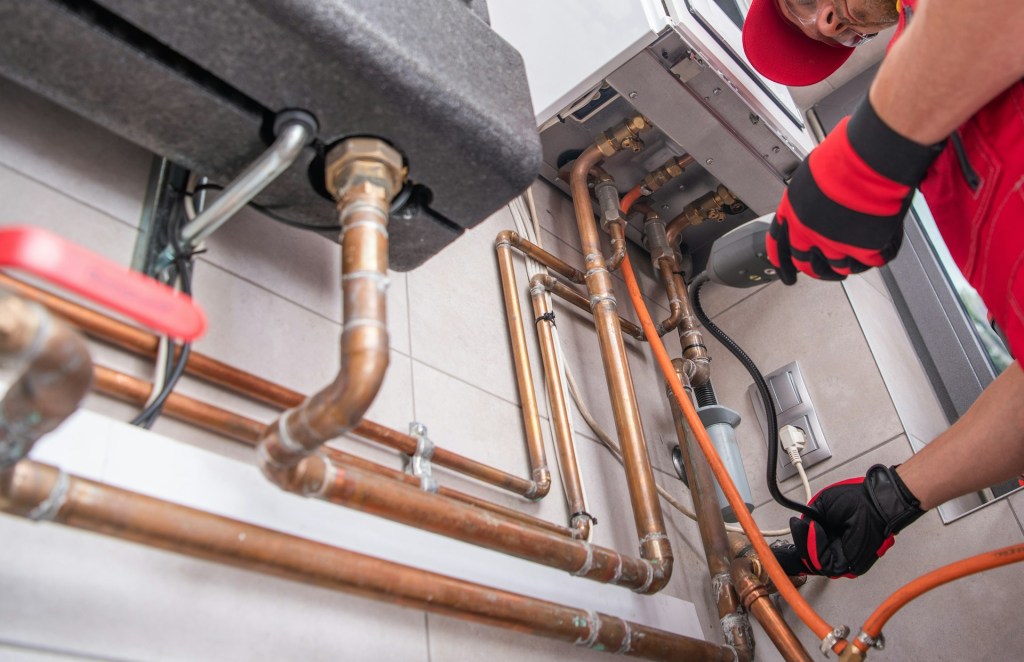
This one is underrated. Uninsulated hot water pipes lose heat as water travels from your water heater to your faucet — which means your water heater has to work harder, and you end up running the tap longer waiting for hot water. Pipe insulation is cheap foam tubing that slips right over your pipes, and it takes maybe an hour to cover the accessible pipes in a basement or utility room.
The Department of Energy estimates that pipe insulation can raise your water temperature by 2–4 degrees Fahrenheit, allowing you to turn down the water heater setting and save 3–4% on water heating costs. While you’re in the utility room, check the temperature setting on your water heater itself — most come factory-set to 140°F, but 120°F is plenty for most households and can reduce energy use by an additional 6–10%.

6. Replace Old Caulking Around Tubs, Showers, and Windows
Old, cracked caulking around tubs and showers isn’t just an eyesore — it’s an open invitation for moisture damage, mold, and in the case of exterior windows, heat loss. Re-caulking is one of those maintenance tasks that most people put off because it seems fussy, but it’s actually quick once you get started and the results are immediately visible.
Remove the old caulk with a utility knife or caulk remover tool, clean the surface thoroughly, and apply a fresh bead of silicone or latex caulk. The whole job around a bathtub takes about an hour. For exterior windows, use a paintable exterior caulk that can flex with seasonal temperature changes. Fresh caulking around windows and doors is one of the simplest ways to improve your home’s energy efficiency without touching anything structural.
7. Set Up a Countertop Compost System
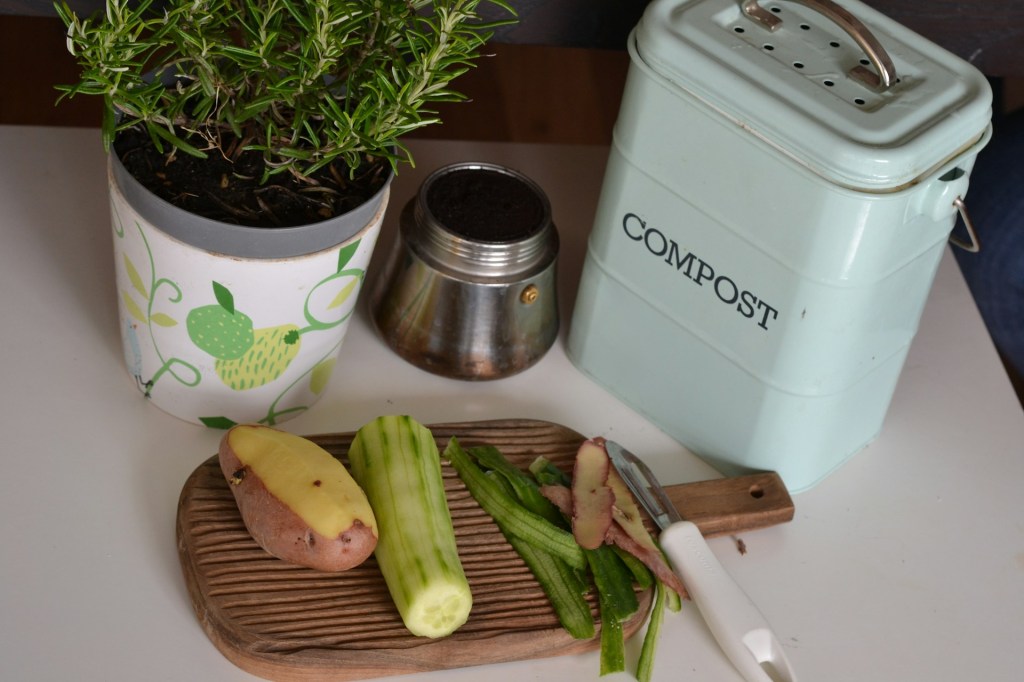
About 30% of what most households throw away could be composted instead of sent to a landfill. When organic waste breaks down in landfills, it produces methane — a potent greenhouse gas. Composting at home not only reduces that impact but gives you a supply of rich, free fertilizer for your garden or yard.
Starting is easier than most people think. A small countertop bin with a charcoal filter keeps odors down and makes it easy to collect scraps — fruit peels, vegetable trimmings, coffee grounds, eggshells — throughout the week. If you have outdoor space, a simple outdoor compost bin or tumbler will break those scraps down into usable compost within a few months. No outdoor space? Many cities now have curbside compost pickup, and some communities have drop-off programs at local farmers markets.
None of these upgrades require a contractor, a permit, or a major time commitment. Together, they can meaningfully reduce your household’s environmental footprint and take a real bite out of your monthly utility bills. Pick one to start this weekend — the hardest part is usually just getting started.
 Whole Earth Home