
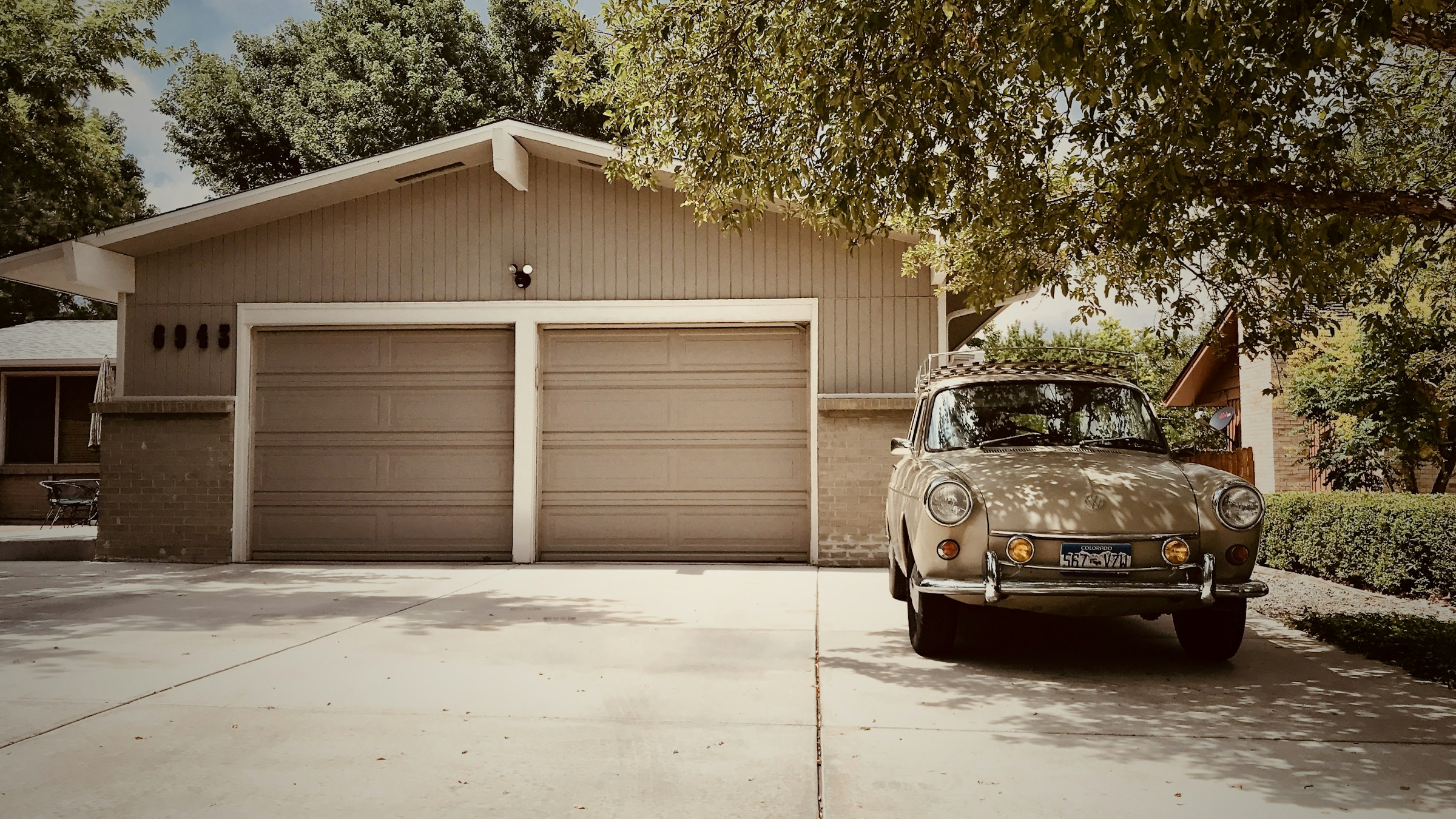
The garage is the one room most of us never decorate, rarely clean and walk through twice a day. It holds the car, the paint cans, the bikes, the second fridge humming in the corner and, more and more often, a charger on the wall. If it’s attached, it also shares air with the rest of the house.
The good news is that a better garage is mostly small fixes. Seal one door, clear one shelf, unplug one old appliance, and the room starts working for the house instead of against it. Here’s how we’d do it, from the door to the kitchen all the way out to the driveway.

Shopping links in this guide are affiliate links, and we may earn a small commission at no extra cost to you. We choose every pick on our own.
The short version
- If your garage is attached, it shares air with the house. Seal the door between them, and never let the car idle inside.
- Thin out the chemical shelf. Keep less, close every lid, and take the rest to a household hazardous waste drop-off.
- That old fridge in the corner may be costing you about $80 a year. Many utilities will haul it away for you.
- Thinking about an EV? Have an electrician look at your panel before you buy a charger.
1. Treat the door to the house like an airlock
If your garage is attached, the door between it and the kitchen or mudroom is the most important door in the house. On the other side are car exhaust, gas cans, solvents and lawn chemicals. The EPA lists exhaust from attached garages as an indoor source of carbon monoxide, and its advice is short: do not idle the car inside the garage. That goes for a cold morning with the big door open, too. Start the car and go.
For the room next to the garage
First Alert 10-year carbon monoxide alarm
A sealed battery that lasts the life of the alarm, so there’s no 2 a.m. chirp and no battery to forget. The digital display shows the CO level, which tells you a lot more than a beep alone. Mount one on the house side of the garage door, then make sure there’s one on every level of the house. When the decade is up, you replace the whole unit.
Then make the door actually seal. Check the weatherstripping around the frame, and add a door sweep if you can see daylight or feel air moving at the bottom. Building codes generally require this door to be solid or fire-rated, and many places also want it to close on its own, so check with your local building department before you replace it.

2. Thin out the chemical shelf
Most garages have a shelf that tells the history of the house: half cans of paint, a mystery solvent, a bag of fertilizer from two owners ago. Products like these give off volatile organic compounds, and the EPA says levels of several of them average 2 to 5 times higher indoors than outdoors. A big part of the fix is simply owning less of it.
Keep what you’ll really use, lids tight, on a high shelf away from kids and pets. Don’t toss the rest in the garbage. Most counties run a household hazardous waste drop-off or a collection day for exactly this. Leftover house paint is even easier in the 12 states (plus D.C.) with a PaintCare program, including Oregon, Washington, California and Colorado, where participating paint stores take it back. Gas cans and fuel belong as far from the door to the house as you can put them, and in a shed if you have one.
3. Unplug the second fridge (or replace it)
The garage fridge is a classic. It holds the overflow, the drinks for the party, the turkey for three days in November. It’s also often the oldest appliance in the house. ENERGY STAR says an old refrigerator uses about 35% more energy than a new certified one, and that keeping a second fridge in the garage or basement could be wasting $80 a year.
A garage is a hard place for a fridge, too. Most are built for kitchen temperatures, and a garage can run hot all summer and close to freezing in winter. If you really need the extra space, look for a model the maker rates for garage use. If you don’t, eat it down, unplug it and call your utility. Many run pickup programs for old fridges, and some offer a rebate on top.
By the numbers
$80
a year to run an old second fridge in the garage or basement
An old fridge uses about 35% more energy than a new ENERGY STAR model.
4. Get ready to plug in

If an electric car is in your future, the garage is where most of the charging will happen. The Department of Energy says many drivers meet their daily needs with Level 1 charging overnight from an ordinary outlet, as long as it’s on a dedicated circuit near where they park. By DOE’s numbers, that adds about two to five miles of range per hour. A Level 2 charger runs on 240 volts and adds roughly 10 to 20 miles an hour, which helps with long commutes and big batteries.
Before you buy anything, have an electrician look at your panel. DOE notes that some homes don’t have the capacity for Level 2 without an upgrade, that permits may be required, and that safety-certified equipment, such as ENERGY STAR certified chargers, is the way to go. If you’re already opening walls or redoing the panel for another project, ask about wiring for a future charger while everything is open. We cover the bigger decision in what to know before switching to an EV.
5. Charge the e-bike where you can see it

E-bikes and scooters have earned a spot in plenty of garages, and their batteries deserve some respect. The Consumer Product Safety Commission’s battery advice is plain: use the charger that came with the device or one the maker recommends, unplug it when it’s done, and be there while it charges. Never charge while you’re asleep or away from home. Only use replacement batteries approved for your device, and never put a lithium battery in the trash or the recycling bin.
When you shop, look for an e-bike certified to UL 2849 or a scooter certified to UL 2272. Those are the safety standards CPSC has called on manufacturers to meet. Give the bike a charging spot near the big door, clear of the paint and the gas cans.
6. Let the garage heat your water
Here’s a twist. In a mild climate, the garage can be a great home for a heat pump water heater. DOE says these units can be two to three times more energy efficient than conventional electric water heaters. They pull heat out of the surrounding air, so they need room to breathe: DOE calls for a spot that stays between 40 and 90°F year-round, with at least 1,000 cubic feet of air around the unit. A roomy garage in a temperate place can check both boxes. Where winters get cold, a basement is usually the better bet, and an installer can tell you for sure. We ran the full numbers on heat pumps in Heat Pump vs. Furnace.
7. Get everything up off the floor

A clear floor is a safer garage, an easier one to sweep, and the best way to notice a leak under the car before it becomes a stain. Rails and hooks on the wall hold the awkward things (bikes, ladders, rakes, folding chairs), and sturdy shelving with lidded, labeled bins holds the rest. Group things by season so the snow shovel and the sprinkler aren’t fighting for the same corner.
For the wall
Rubbermaid FastTrack rail and hook kit
A steel rail that screws into the wall studs, plus hooks that slide on and off as your needs change. It holds bikes, ladders and long-handled tools far more securely than a nail ever will, and you can add hooks later instead of starting over with a new system.
While you’re down there, look at the bottom of the big door. If the old rubber is cracked or flattened, leaves, water and mice will find the gap.
For the big door
MD Building Products garage door bottom seal
A plain 9-foot rubber seal that nails or screws to the bottom of a wood garage door and cuts to length with scissors. Measure first: many metal doors use a slide-in retainer instead, and need a seal made for that track.
Swap this for that
| Instead of | Try | Why it is better |
|---|---|---|
| Warming the car up in the garage | Starting it and driving off | No exhaust drifting into the house |
| A shelf of half-used chemicals | A hazardous waste drop-off and a short list of keepers | Fewer fumes, less clutter |
| The old garage fridge | Recycling it, or a garage-rated ENERGY STAR model | Up to $80 a year back |
| Charging the e-bike overnight | Charging while you’re home and awake | CPSC’s first battery rule |
| Bikes and tools on the floor | Wall rails and hooks | A clear floor and no scratched car doors |
| A cracked door seal | A new bottom seal | Keeps out leaves, water and mice |
FAQ
Is it OK to warm up the car in the garage with the big door open?
No. The EPA’s advice is not to idle a car inside the garage at all. Exhaust can build up fast in an enclosed space and drift through the door into the house. Back out first if you want to let it run.
Should the CO alarm go in the garage itself?
Put it on the house side of the door, and on every level of the house. Check your alarm’s manual before mounting one inside the garage, since many makers advise against it because of the temperature swings and fumes.
Can a regular fridge live in the garage?
It can, but it may struggle in summer heat and winter cold. If you’re buying one for the garage, look for a model its maker rates for garage use. If you already have an old one out there, ask whether you really need it.
Do I need a Level 2 charger for an electric car?
Not always. DOE says many drivers meet their daily range by charging overnight on Level 1 from a regular outlet on a dedicated circuit. Level 2 makes sense for long commutes, big batteries or irregular schedules. An electrician can tell you whether your panel can handle it.
More from around the house: Heat pump vs. furnace · The 9 things quietly costing you $1,000 a year · Phantom power · The winter indoor air problem
Product details come from each maker and its Amazon listing as of November 2026; listings change. Sources: U.S. EPA on carbon monoxide and volatile organic compounds; ENERGY STAR Flip Your Fridge; U.S. Department of Energy Alternative Fuels Data Center, Vehicle Technologies Office Fact #919 and Energy Saver; U.S. Consumer Product Safety Commission Micromobility Information Center and 2023 letter to manufacturers; PaintCare. Whole Earth Home is a participant in the Amazon Services LLC Associates Program. Shopping links in this post are affiliate links, and we may earn a small commission on qualifying purchases at no extra cost to you.