
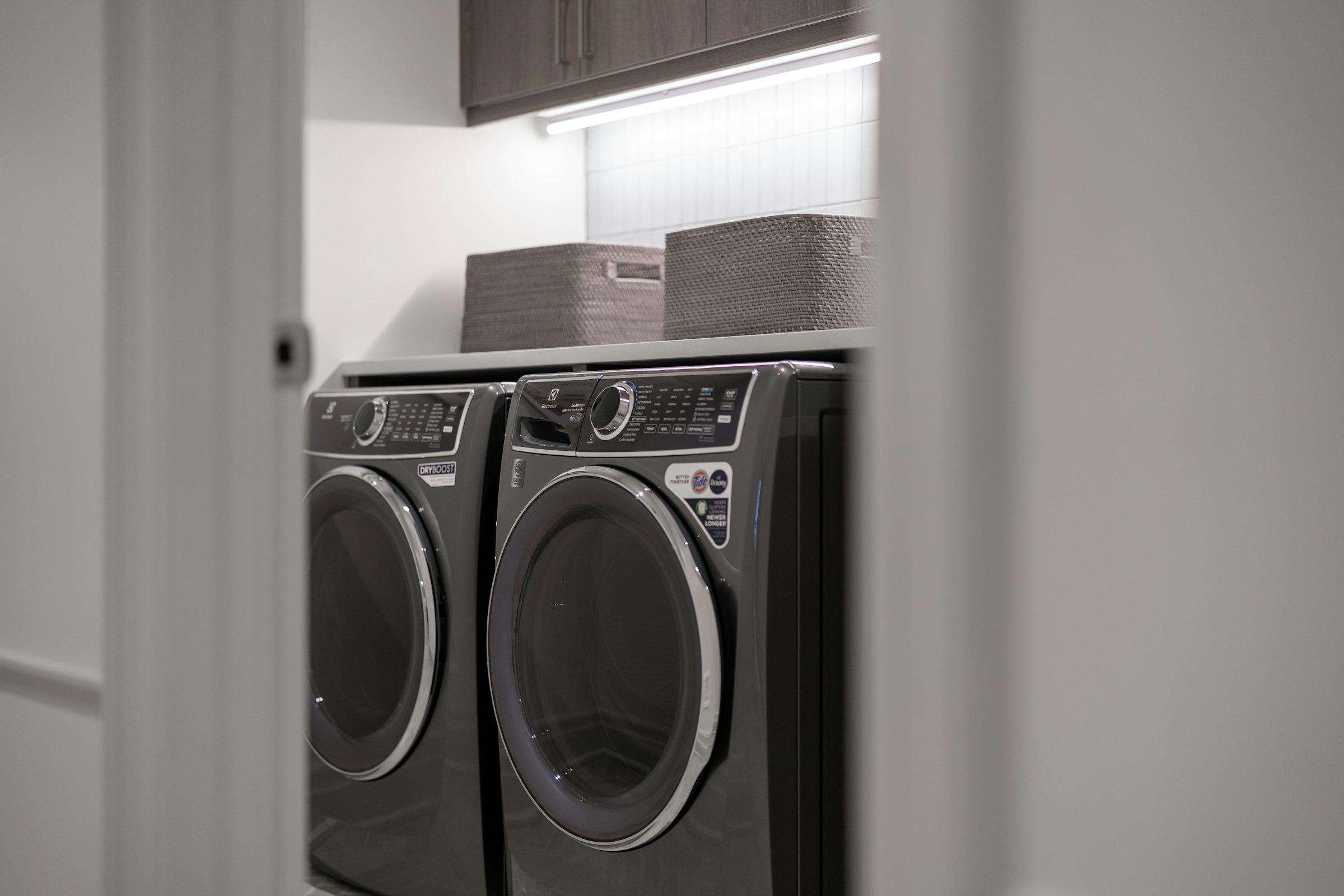
A washing machine is mostly a water heater with a drum attached. ENERGY STAR puts it bluntly: heating the water takes about 90% of the energy a washer uses. The dryer next to it is the other big draw, and if it vents outdoors, every load in January also pushes air your furnace already paid to warm straight out through the wall.
So there’s an order to this. The free ones come first and save the most: a dial, a full drum, a faster spin. The one that costs money waits until the old dryer gives out. Here’s the order we’d follow, from the first load of the week to the day you shop for a new machine.
The short version
- Wash cold. Going from hot to warm alone cuts a washer’s energy use roughly in half.
- Fill the drum and pick the highest spin your clothes can take, so the dryer has less water to boil off.
- Clean the lint screen every load and the vent once a year. Failure to clean is the leading cause of dryer fires.
- When the dryer dies, look hard at a heat pump model: about 70% less energy, no hole in the wall, and roughly $100 a year saved once you count the warm or cooled air a vented dryer sends outside.
1. Turn the dial to cold
Since nearly all of a washer’s energy goes into hot water, the temperature dial matters more than anything else in the room. ENERGY STAR says switching from hot to warm can cut energy use in half, and the cold setting saves more on top of that. Everything else, the motor included, shares the last 10%.
Cold works best with a detergent made for it. The National Park Service’s laundry guidance says to wash in cold water with cold-water detergents whenever possible, and to use detergent labeled HE in front-loaders and high-efficiency top-loaders. Save the hot cycle for the jobs that really call for it, and check the care tag when you’re unsure.
By the numbers
90%
of a washer’s energy just heats the water
Wash in cold and you skip most of it.
2. Fill the drum
Here the washer and the dryer behave differently. ENERGY STAR notes that a washer uses about the same energy regardless of the size of the load, so two half loads cost close to twice what one full load does. Wait until the basket is full. When you can’t, the Park Service suggests setting the water level to match the load.
If the washer itself is on its last legs, a certified model saves on both meters. ENERGY STAR certified washers use about 20% less energy and about 30% less water than standard ones. A full-size certified machine uses 14 gallons a load, compared to 20 for a standard model.
3. Spin it hard
Every drop the washer leaves behind is a drop the dryer has to evaporate with heat. Spinning water out is far cheaper. ENERGY STAR’s advice is to choose a high spin speed or the extended spin option when the fabric allows, because it leaves less moisture in your clothes and shortens the drying time.
Towels, jeans and sheets can almost always take the top setting. Keep the gentle spin for delicates and anything the tag says to treat kindly. It’s one extra button press, and it pays off in the next machine over.
4. Dry less, or skip the dryer

A dryer on a timer keeps heating clothes long after they’re dry. If your machine has a moisture sensor, use it instead of a timed cycle; the Park Service’s laundry guidance says simply don’t over-dry clothes. ENERGY STAR certified dryers use automatic shutoff that senses when the clothes are dry.
Sorting helps too. University of Illinois Extension points out that lighter-weight clothes take less time to dry, so a load of T-shirts shouldn’t ride along with three bath towels and a pair of jeans. Better still, skip the dryer for anything that will dry overnight. A folding rack handles shirts, sweaters and anything that shrinks, and it lives flat in a closet between loads.
One caveat for winter: a rack of wet clothes puts a lot of water into the air. If your windows are already fogging, run the bath fan or hang the rack near it, and read our winter indoor air guide for where humidity should sit.
5. Give the lint somewhere to go

Lint is the dryer hazard most of us forget about. The National Fire Protection Association says the leading cause of home dryer fires is failure to clean them, and a clogged path also makes every cycle run longer. The routine is short:
- Clean the lint screen before or after every load, and now and then pull out the lint that collects in the slot below it.
- Clean the vent pipe once a year, or sooner if clothes start taking longer than usual to dry. NFPA notes a dryer lint removal service can do it for you.
- Check what the duct is made of. NFPA calls for rigid or flexible metal venting, and the Park Service warns against plastic vents that can collapse and clog.
- Don’t leave the dryer running when you head out or go to bed.
If you only remember one date, make it the vent before the new year. We explain why January matters in our fall cleaning checklist.
6. When the dryer dies, go heat pump
A conventional dryer heats air, blows it through your clothes once and sends it outside. A heat pump dryer recirculates its air instead, pulling the moisture out as water. ENERGY STAR says certified heat pump dryers use around 70% less energy than a conventional dryer, and since nothing goes outdoors, there’s no dryer vent at all. No more crawling behind the machine to clean a duct!
Here’s a point most dryer shoppers never hear. The Department of Energy’s Building America Solution Center, run by Pacific Northwest National Laboratory, notes that ventless dryers don’t exhaust conditioned air to the outside, so they also save on heating and cooling. Their numbers: under 300 kWh a year against about 600 for a conventional electric dryer, and once the heating and cooling savings are counted, about a third of the energy and roughly $100 a year. By their estimate, the savings cover the higher price in about five years.
There are catches. Some models hold less and some take longer to dry a load. The water has to go somewhere: a hose to the same drain the washer uses, or a tank you empty after every load. And the lint filter matters even more here; the guide says to clean it every load and to wash the filter and clean the condenser every 30 to 40 loads. If you’re replacing a gas dryer, note that some all-in-one washer-dryers run on an ordinary 120-volt circuit, so you may be able to skip running a new 240-volt line.
Swap this for that
| Instead of | Try | Why it is better |
|---|---|---|
| The hot cycle by habit | Cold, with a cold-water detergent | Skips most of the washer’s energy |
| Two half loads | One full load | The washer uses about the same energy either way |
| The gentle spin on towels | High or extended spin | Less water left for the dryer to boil off |
| A timed dry cycle | The moisture sensor, or a rack | Stops when the clothes are dry |
| A plastic dryer duct | Rigid or flexible metal | Holds its shape and keeps lint moving |
| A new vented dryer | A heat pump dryer | About 70% less energy and no vent |
FAQ
Does cold water actually get clothes clean?
For everyday loads, yes. ENERGY STAR says cold will generally do a good job, and the Park Service recommends pairing it with a detergent made for cold water. ENERGY STAR makes an exception for oily stains, which may need warmer water, and the care tag always gets the last word.
How often should the dryer vent be cleaned?
NFPA says once a year, or more often if drying starts taking longer than normal. Longer drying times are the early warning sign that lint is building up somewhere you can’t see.
Do heat pump dryers need a vent?
No. They condense the moisture into water instead of blowing it outside. That water drains through a hose or collects in a tank, so plan for a drain nearby or a quick emptying routine.
Is it worth replacing a working dryer?
Usually not. Start with the free fixes above, which shrink what the old dryer has to do. Make the switch when the old one needs a costly repair or gives out, and you get the heat pump savings without throwing away a working machine.
More from around the house: Step inside the laundry room · The 9 things quietly costing you $1,000 a year · Phantom power · The fall cleaning that matters
Sources: ENERGY STAR clothes washers and clothes dryers; National Park Service, Laundry Practices and Water Conservation; University of Illinois Extension, Laundry Efficiency; National Fire Protection Association, Clothes Dryer and Washing Machine Safety; Pacific Northwest National Laboratory, Building America Solution Center, Install a Ventless Clothes Dryer or Combo Washer/Dryer; U.S. Fire Administration.