
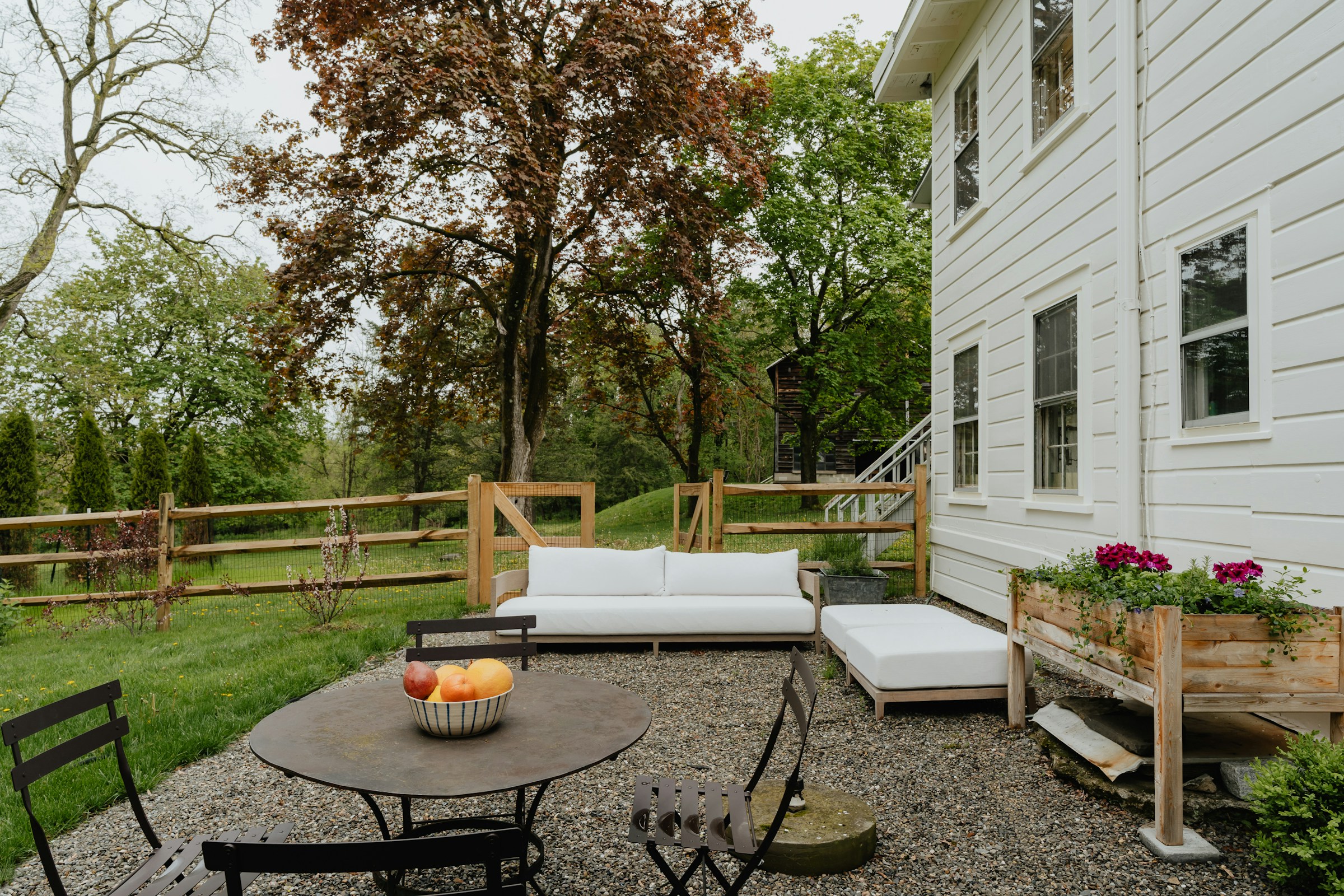
We think about a house room by room without even trying. The kitchen is for cooking, the bedroom is for sleeping, and nobody sets up a ping pong table next to the stove. Then we step out the back door and treat the whole yard as one big open space, where morning coffee, a family dinner, a soccer game and a Sunday nap all fight over the same patch of grass.
The fix is to give the backyard rooms too. Zoning a yard means deciding what each part of it is for, then nudging the layout so those uses stop bumping into each other. It costs less than you’d think, and the yard you already have starts to feel bigger.
The short version
- Give each activity its own spot, so dinner, play and quiet time stop competing.
- Put the zones you use most closest to the back door, the kitchen and the light switches.
- Mark the edges with paths, planters, lighting and furniture, not walls.
- Plan for change. Today’s play lawn can be tomorrow’s vegetable garden.
1. Use every corner of the yard
An unzoned yard tends to get used in one spot, usually the patio right outside the door, while the rest sits there as lawn to mow. Once each activity has a home, the far corners start pulling their weight too. A common layout puts a seating zone close to the house where it’s easy to reach, a dining zone in its own part of the yard, and an open stretch of grass left free for play and exercise.
There’s no one right map. It depends on how your household actually lives. If you host a lot, put the dining zone near the kitchen so food and dishes don’t take the long way around. If the kids rule the yard, give them the biggest, flattest piece and tuck the grown-up seating somewhere they can still keep an eye on things.

2. Make each zone comfortable for its job
A lounge zone wants deep, comfortable seating arranged for talking. A dining zone needs room for the whole table plus space to pull the chairs back. When those two live in the same spot, neither works well. Split them up and people can drift between them without stepping over each other, which matters most when a lot of people are out there at once.
Convenience should guide the map too. The zones you use every day belong near the doors, storage and outdoor light switches. The ones you use now and then can live farther out. Before you move anything heavy, grab a tape measure and check the real distances between where the table, the seating and the paths would go. A yard that looks roomy can turn tight fast once furniture lands in it.
3. Let the yard change with the day
A zoned yard follows your routine. There can be a sunny corner for morning coffee, a table for lunch, and a fire pit or string lights for evenings. Nothing has to be rearranged each time, because every part of the day already has somewhere to happen. That’s especially handy when everyone in the house wants something different from the yard.
Zones can grow up with you as well. The play area can turn into a vegetable garden or a second seating spot once the kids are older, and the dining zone can stretch to seat more people. When you remake a zone, choose durable, low-waste materials and finishes you won’t need to replace in a few seasons. Reclaimed stone and brick, and wood rated for outdoor use, are good places to start.

4. Draw the lines softly
Zones shouldn’t make the yard feel boxed in. Walkways, a change in paving, planters, lighting and the angle of the furniture are all enough to tell people where one room ends and the next begins. A gravel patch under the table, a row of tall grasses behind the lounge chairs, a stepping stone path out to the play lawn. Small cues do the work, and none of them have to be permanent.
Planting is the gentlest divider of all, and the most useful. A low hedge or a bed of native perennials can separate the dining zone from the play lawn while also feeding pollinators and soaking up rain.
Walk out the back door of our house. In the Whole Earth House, the backyard is a room of its own, with every garden, compost and outdoor guide we’ve written filed there. Tap it and look around!
The payoff
A zoned backyard handles a lot at once without feeling crowded. Guests drift between the table and the lounge, kids play without crashing the grown-up conversation, and there’s always one quiet corner left for whoever needs it. You get a yard shaped around how you really live, without tearing out the whole design to get there.
FAQ
How many zones does a backyard need?
Most yards do well with two to four: somewhere to sit, somewhere to eat, open space for play, and maybe a garden or quiet corner. A small yard can do the same with just one dividing cue between two spots.
Do I need to build anything to zone a yard?
No. Moving furniture, adding a rug or a patch of gravel, and grouping some planters is often enough. Paths and new paving help, but you can try a layout for a season before you commit to anything permanent.
More from the backyard: Fall Is Compost Season · Ways to Create an Eco-Friendly Backyard · An Outdoor Entertainment Area for Kids · Walk Through the Whole Earth House
Lead photo: Clay Banks on Unsplash.