
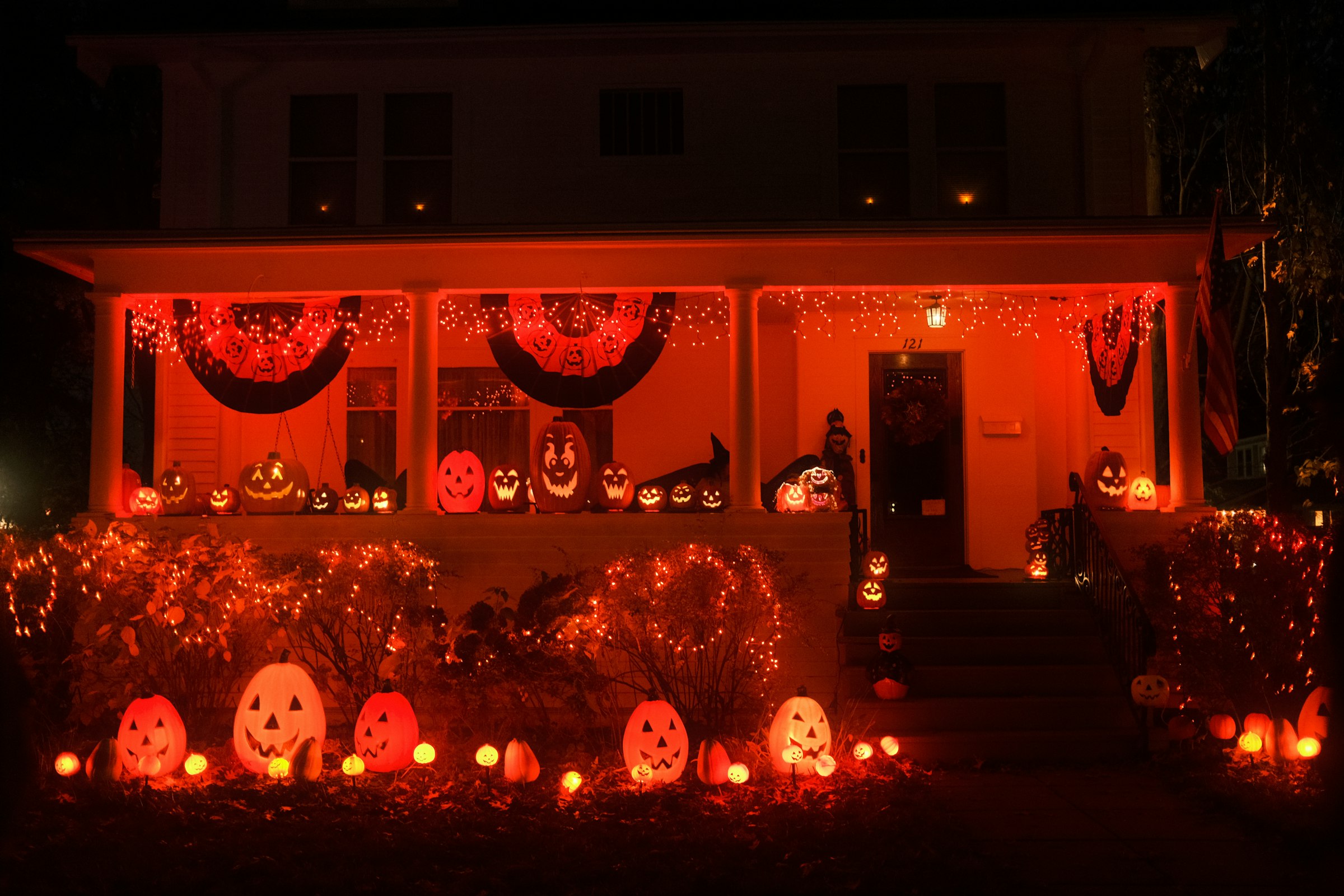
Halloween is the most fun a house gets all year. The porch becomes a stage, the kitchen smells like roasted seeds, and the whole street turns out after dark. It is also, quietly, one of the most wasteful nights on the calendar: a costume worn once, a bag of plastic cobwebs, a bowl of single-wrapped candy and a jack-o’-lantern sliding into the trash on November 1.
None of that is the good part. The good part is candlelight, crunchy leaves, homemade costumes and a pot of something warm on the stove. So this is our guide to keeping all the spooky and losing most of the landfill. No guilt trips, just a better-looking, cheaper, cozier Halloween that happens to be kinder to the planet too!
The short version
- Americans are expected to spend $13.5 billion on Halloween this year, with about $4.3 billion on decorations and $4.4 billion on costumes, according to the National Retail Federation.
- More than a billion pounds of pumpkins end up in U.S. landfills after Halloween, where they rot into methane. Eat them, donate them or compost them instead.
- The best-looking decor is often free: branches, dried grasses, gourds and leaves from your own yard, plus paper and old sheets.
- Skip the stretchy fake cobwebs outdoors. Wildlife rehabbers see birds, bats and even owls tangled in them every fall.
1. Decorate with what is already falling off the trees
Late October hands you a free decorating budget. Bare branches, seed heads, dried hydrangeas, ornamental grasses, pine cones, acorns and a pile of leaves in every shade of rust can do more for a mantel than anything from a big-box aisle. Gather them on a walk or from your own yard (never from parks or protected land), shake out any passengers, and arrange them in bottles, crocks and old jars.

A few ideas that look far more expensive than they are:
- A branch “tree” for the entry. Stand a few gnarly bare branches in a tall crock weighted with stones, then hang paper bats or small dried gourds from them. It is a little haunted forest that goes straight into the yard waste bin afterward.
- A leaf garland. Thread pressed maple and oak leaves on cotton string. They curl and crackle as they dry, which is exactly the mood.
- Dried corn and grasses on the door. Tie a bundle of dried corn, wheat or grasses with jute instead of hanging a plastic wreath. When November comes, the corn can go out for the birds and squirrels.
- Black-painted thrift finds. A few mismatched candlesticks and frames from a thrift store, spray-painted matte black, read instantly as gothic and come back out every year.
2. Choose pumpkins you can actually eat
According to the Department of Energy, more than a billion pounds of pumpkins end up in U.S. landfills every year after Halloween. Buried under other trash without oxygen, they break down slowly and release methane, a greenhouse gas far more potent than carbon dioxide. The fix is mostly about what you buy and what happens next.

Decorate with eating squash. A cluster of heirloom pumpkins, ghostly white Lumina, warty Cinderella pumpkins, blue Hubbards and butternuts is more beautiful than a row of identical orange carvers, and every one of them is dinner in November. Uncarved, most winter squash will happily sit on a cool porch for weeks.
Carve one, not five. A carved pumpkin starts going soft within days, so carve one great jack-o’-lantern close to Halloween and leave the rest whole. Keep it in the shade and out of the rain and it will last longer. A good set of stainless steel carving tools lasts for decades, unlike the flimsy saws in drugstore kits that snap by the second pumpkin.
Save the guts. Rinse the seeds, toss them with oil and salt, and roast them at 325°F until they are golden and crisp, around 20 to 30 minutes. Carving pumpkins have stringier, milder flesh than pie pumpkins, but it still roasts beautifully into soup or stock.

3. Light it warm, light it cheap
Halloween lives or dies on lighting. The good news is that the most atmospheric options are also the most efficient.
By the numbers
75%
less energy from an LED bulb

- Inside the jack-o’-lantern: rechargeable flickering LED tea lights. No open flame near costumes and dry leaves, no pile of dead coin batteries, and you can reuse them on the table at Thanksgiving.
- On the table: beeswax tapers in mismatched holders. They burn slowly, smell faintly of honey and drip in the most satisfyingly spooky way. Keep real flames indoors and supervised.
- Outside: warm LED string lights. The Department of Energy has estimated that buying and running large C-9 incandescent holiday strings for ten seasons costs about $122, against about $18 for LED strings, and that LED strings can last for decades.
- On a timer: plug the porch lights and any inflatables into an outdoor plug-in timer so they run from dusk to bedtime and not all night.
What does that giant inflatable cost to run? Look for the watts on the blower’s label and do the math. As an example, a blower drawing 150 watts for six hours a night through all of October uses about 28 kilowatt-hours, roughly $5 at today’s average electricity price of about 18 cents. Not a fortune, but the same blower left on 24 hours a day is closer to $20, which is a lot of money for a ghost nobody sees at 4 a.m.
Shopping links in this guide are affiliate links, and we may earn a small commission at no extra cost to you.
4. Leave the fake cobwebs on the shelf
That stretchy polyester webbing is the one decoration we would ask everyone to skip outdoors. It is nearly invisible to birds and does not break the way a real web does. Wildlife rehabilitation centers from Kentucky to British Columbia report songbirds, hummingbirds, bats, chipmunks and even owls tangled in it every fall, and the timing is unlucky: Halloween lands in the middle of fall bird migration. Afterward, the stuff is impossible to recycle and blows around the neighborhood for months.

Better idea: go find the real ones. October is peak season for orb weavers, and a dew-covered web on a cold morning is spookier than anything in a bag. If you want webs on the porch, draw them in chalk on the steps or cut them from paper for the windows. Indoors, a length of old cheesecloth from the kitchen drawer draped over a mirror does the same job and goes back to straining stock in November.
5. Make decorations you will want to keep
The cheapest Halloween decor is the stuff you already own, so the goal is to build a small box of things good enough to bring out every single year. Paper is the hero here. A flock of black paper bats taped across a wall costs almost nothing, looks fantastic, and flattens into an envelope for storage.

- Paper bats and moths cut from black cardstock or old cereal boxes painted black. Make a stencil once and the kids can cut a hundred.
- Cheesecloth or old-sheet ghosts draped over a balloon or a jar and stiffened with a little starch. Hang them from a branch or the porch ceiling.
- Paper-bag luminaries with faces cut out, weighted with sand and lit with LED tea lights, lining the front walk.
- One good piece a year. If you love buying decorations, buy one beautifully made thing (a ceramic pumpkin, a cast-iron black cat, a vintage find) instead of ten plastic ones. In ten years you have a collection instead of a landfill run.
6. Costumes: closet first, thrift second, store last
When the UK charities Hubbub and the Fairyland Trust checked 324 Halloween costumes and accessories from 19 major retailers, they found 83 percent of the material was oil-based plastic, mostly polyester, adding up to roughly 2,000 tonnes of plastic waste in a single season. Their earlier research estimated about four in ten costumes are worn only once. Store-bought costumes are not built to come back next year.

Some of the best costumes on any block are built from a closet raid. A bedsheet ghost is a classic for a reason. A black turtleneck plus cardboard ears is a cat. Flannel, a beanie and a fake beard from yarn is a lumberjack. Thrift stores are full of witchy dresses, old suits for a vampire and bathrobes for a wizard, and everything goes back into rotation afterward. For kids, organize a costume swap with neighbors or your school in early October: kids outgrow costumes long before they wear them out.
Two small swaps make a difference too: face paint you already have instead of a plastic mask, and a pillowcase or canvas tote for trick-or-treating instead of a new plastic pail. A pillowcase also holds a truly heroic amount of candy!
7. Treats with less trash
Most candy wrappers are a mix of plastic and foil layers that curbside recycling cannot handle, so the wrapper is the part that lingers. A few ways to shrink the pile without being the house that hands out raisins:
- Pick candy in paper boxes or plain foil. Small cardboard boxes go in the paper recycling, and clean aluminum foil can often be balled up and recycled. Check your local program first, since rules vary.
- Buy fewer, better bags. NRF expects $4.1 billion in candy this year. Count your realistic trick-or-treaters instead of buying three extra bags “just in case.”
- Go homemade for your own crowd. Caramel apples, popcorn balls, ghost meringues and pumpkin bread are made for parties and classroom swaps where the families know you.

8. The Halloween night in
Not every Halloween needs a party. Some of our favorite ones are the quiet kind: porch light on for the trick-or-treaters, the house lit only by candles and a fire, and something seasonal on the stove between doorbell rings.

- A simmer pot. Apple peels and cores from the caramel apples, orange rinds, cinnamon sticks and cloves in a pot of water on low. The house smells incredible, and the scraps were headed for the compost anyway. We have more ideas in our guide to natural home scents.
- Soup served in the squash. Roast a small sugar pumpkin, scoop out the flesh for soup, and serve it back in the shell.
- Mulled cider from local apples in a big pot instead of a case of cans.
- A scary movie by candlelight, or better, ghost stories read aloud with the lights off. Nothing uses less electricity than a good story.
9. The November 1 plan
The real eco-Halloween happens the morning after. Here is the order we work through it, from best to good:
- Eat the uncarved ones. Every whole pumpkin and squash on the porch is soup, curry, pie or roasted wedges.
- Donate to animals. Many farms, sanctuaries and zoos happily take pumpkins as feed, and programs like Pumpkins for Pigs connect households with farms that want them. Remove candles, wax, paint and glitter first.
- Find a pumpkin smash. Community composting events now run in cities across the country. One Illinois network alone diverted about 326,000 pounds of pumpkins in 2024.
- Compost the rest. Break it into chunks so it breaks down faster, bury it in the pile or put it in your yard debris or food scrap bin if your city collects them.

One thing not to do: do not toss old jack-o’-lanterns into parks, woods or nature preserves to “feed the wildlife.” The University of Illinois Extension warns that rotting and decorated pumpkins can harm wild animals and smother native plants. A few unpainted pumpkin chunks in your own garden bed are fine, and the squirrels will find them either way.
Then pack away the keepers. Flatten the paper bats into an envelope, wrap the LED tea lights and timer in a towel, and label one box “Halloween.” Next year’s decorating takes ten minutes and costs nothing. The leaves, branches and dried corn go into the yard waste, and the garden gets a free layer of mulch out of the deal. (If you are tempted to rake every leaf away, read our case for the lazy autumn reset first.)

By the numbers
30–40%
of the food supply in the U.S. is wasted
Every pumpkin that gets eaten or composted shrinks it.
Swap this for that
| Instead of | Try | Why it is better |
|---|---|---|
| Plastic stretch cobwebs outdoors | Chalk webs, paper webs, real webs | No tangled birds, nothing to bin |
| Five carving pumpkins | One carver plus eating squash | Dinner in November, less to rot |
| Battery tea lights | Rechargeable LED tea lights | No dead coin cells, reusable all winter |
| Lights on all night | A plug-in timer | Same show, a fraction of the hours |
| A new polyester costume | Closet, thrift store or a swap | Worn again instead of worn once |
| A plastic treat pail | A pillowcase or tote | Already in the house, holds more |
| Plastic-wrapped candy | Candy in paper boxes or foil | Often recyclable where you live |
| Pumpkins in the trash | Eat, donate, smash, compost | Keeps methane out of the landfill |
FAQ
Can I compost a painted or glittered pumpkin?
Not with the paint on. Acrylic paint, glitter and sealants are plastics. Cut away the painted skin and put that piece in the trash, then compost the rest. Next year, try decorating with natural markers like leaves pinned to the skin, or just leave them beautifully bare.
My jack-o’-lantern is already moldy. Can it still be composted?
Yes. Mold is just decomposition getting a head start. Do not eat it or feed it to animals, but it is perfectly good for the compost pile or your city’s food scrap bin.
Are real candles or LED candles better?
Inside a jack-o’-lantern and anywhere near costumes, dry leaves or curtains, rechargeable LEDs win on safety alone. On the dinner table, where you can watch them, beeswax candles are a lovely choice. Whatever you light, the goal is the same: buy it once and use it for years.
More for a cozy, lighter-footprint season at home: The vegetables that get sweeter after a frost · The fall cleaning checklist · What your house uses while everyone is asleep · Cut your heating bill for under $100
Sources: National Retail Federation, 2026 Halloween consumer survey (September 2026); U.S. Department of Energy figures on post-Halloween pumpkin waste, as reported by the Associated Press; U.S. Department of Energy estimates on LED holiday lighting; Hubbub and the Fairyland Trust, Halloween costume plastics study; reporting on wildlife entanglement in fake webs from Raptor Rehabilitation of Kentucky, the Rocky Point Bird Observatory and the Chattahoochee Nature Center; SCARCE pumpkin smash results (2024) and University of Illinois Extension, via WTTW; NPR on pumpkins as livestock feed. Electricity price: EIA national average residential rate. Whole Earth Home is a participant in the Amazon Services LLC Associates Program. Shopping links in this post are affiliate links, and we may earn a small commission on qualifying purchases at no extra cost to you.