
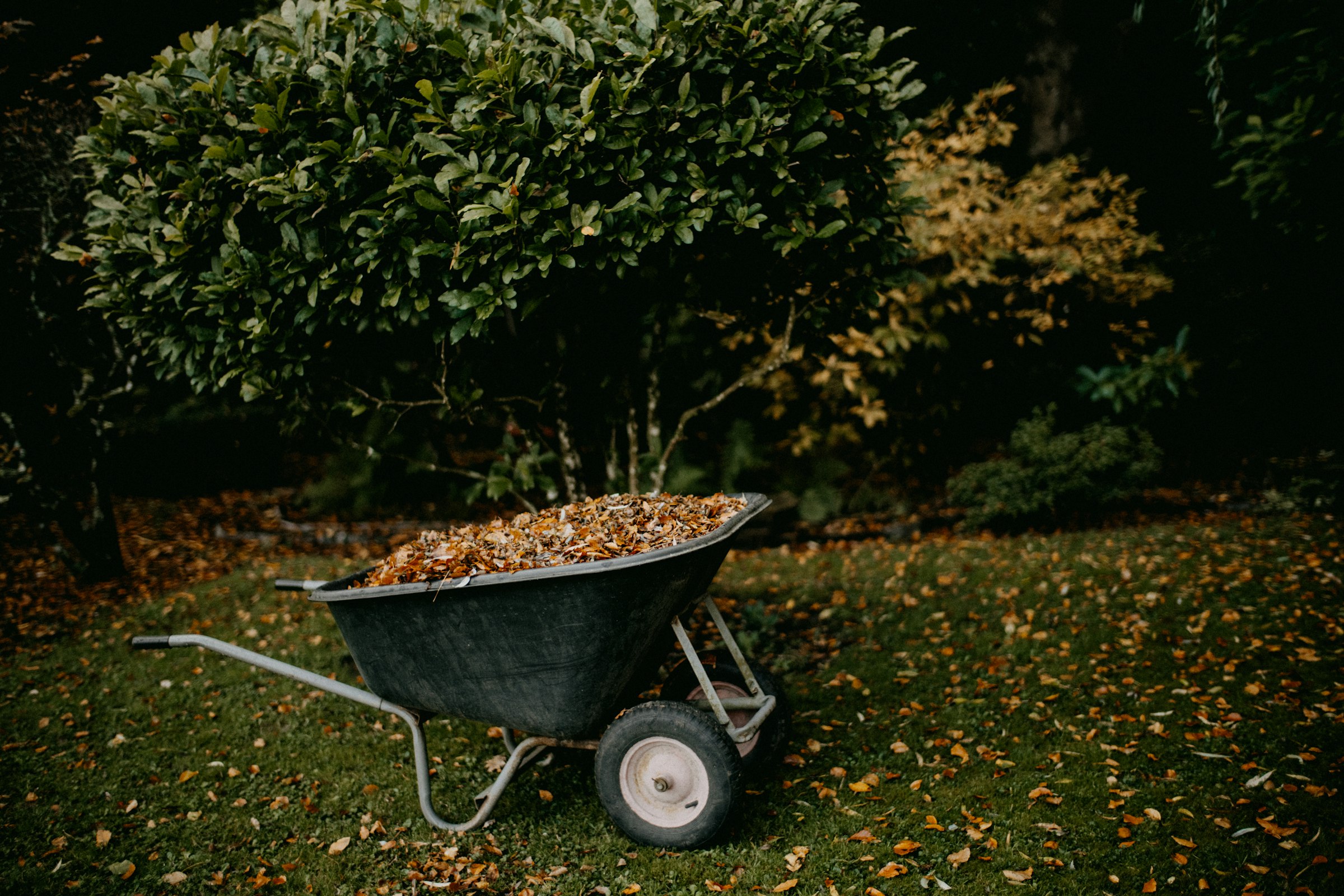
Every October the yard hands you a gift and asks you to haul it to the curb. Leaves pile up on the lawn, the tomato vines collapse, the squash plants go gray, and the porch pumpkins start to slump. All of that is the raw material for the best soil you will ever own, and fall is the one season when you get it in bulk, for free.
This is our guide to fall composting: how to turn leaves, garden cleanup and Halloween leftovers into next spring’s garden, without fancy equipment or a chemistry degree. If you read our case for the lazy autumn reset, think of this as the hands-on companion. Leave plenty where it falls for the wildlife, then put the rest to work!
The short version
- Fall leaves are the “browns” every compost pile runs short on. The EPA recommends two to three parts browns to one part greens.
- Shred leaves before you use them (a lawn mower works), keep the pile as damp as a wrung-out sponge, and build it at least three feet wide and tall.
- Keep diseased plants, weeds gone to seed and herbicide-treated clippings out of a home pile, which rarely gets hot enough to kill them.
- Bag or cage the extra leaves. In six months to a year they become leaf mold, one of the best soil conditioners there is.
Why fall is compost season
A compost pile is a balance of two kinds of material. Greens are wet and nitrogen-rich: kitchen scraps, coffee grounds, fresh garden trimmings. Browns are dry and carbon-rich: leaves, straw, stalks, shredded cardboard. Most of the year a household makes far more greens than browns, which is why summer piles turn into a slimy, smelly mess. October flips that. Suddenly you have more browns than you know what to do with, and the end-of-season garden supplies plenty of greens to match.

It also matters where all of this goes when it does not get composted. The EPA estimates that food makes up about 24 percent of what Americans send to landfills, and that landfilled food waste is responsible for an estimated 58 percent of the methane escaping from municipal landfills. Yard trimmings add millions of tons more: in its most recent detailed count, the agency found about 10.5 million tons of grass, leaves and brush still went to landfills in a single year. A backyard pile keeps a meaningful slice of that out, and pays you back in soil.
The recipe: browns, greens, air and water
Composting is closer to baking bread than following a chemistry formula. Get the proportions roughly right and the microbes do the rest.
- Two to three parts browns to one part greens, by volume. That is the EPA’s rule of thumb. If the pile smells sour or ammonia-like, add leaves. If nothing is happening, add greens.
- Shred the leaves. Whole leaves mat into soggy sheets that shut out air. Run them over with a mower a couple of times, or use a leaf shredder. The University of Georgia Extension notes that smaller pieces break down faster because microbes have more surface to work on.
- Keep it damp, not wet. Aim for the feel of a wrung-out sponge. Dry fall leaves need a good soaking with the hose as you layer them in.
- Go big enough. A pile at least three feet wide and three feet tall holds its heat and moisture. Smaller piles dry out and stall.
- Give it air. Turn the pile with a digging fork every few weeks if you want compost by spring. Leave it alone and it still works, just slower.

Save a stash of leaves for later. Fill a few bags or a bin with dry leaves and park them beside the compost. All winter and into summer, every time you add a bucket of kitchen scraps, toss a couple of handfuls of leaves on top. It keeps the balance right, smothers smells and fruit flies, and hides food from rodents. Next August, when you are drowning in zucchini and grass clippings, you will be very glad you did!
What goes in from the fall cleanup, and what stays out
Putting the garden to bed generates a mountain of material. Most of it belongs in the pile. A few things do not, because a typical backyard heap rarely gets hot enough to sterilize them. Texas A&M AgriLife notes that a well-managed hot pile reaches around 140°F, enough to kill most weed seeds within hours, but many home piles never get there.

| Into the pile | Keep it out |
|---|---|
| Shredded leaves, straw and dry stalks (browns) | Plants with blight, mildew or other disease |
| Spent tomato, bean and squash vines that were healthy | Weeds that have gone to seed, and aggressive spreaders |
| Fall vegetable trimmings and frosted greens | Grass or plants treated with herbicide |
| Kitchen scraps, coffee grounds, paper filters, crushed eggshells | Meat, fish, bones, dairy, oils and grease |
| Chopped pumpkins and gourds, minus paint and wax | Pet waste and cat litter |
| Shredded plain cardboard and brown paper bags | Painted or treated wood, glossy paper, produce stickers |
One more note on the “compostable” forks and bags from takeout. Backyard piles generally do not get hot enough to break them down, so the EPA suggests checking whether your city’s commercial composting accepts them instead.
Shopping links in this guide are affiliate links, and we may earn a small commission at no extra cost to you.
Make leaf mold, the lazy gardener’s gold
If composting sounds like too much work, start here. Leaf mold is simply leaves left to break down on their own, with no greens and no turning. It is not much of a fertilizer, but it is a superb soil conditioner: dark, crumbly, sweet-smelling, and able to hold a surprising amount of water.

- The cage method. Make a ring of chicken wire or a roll of garden fencing about three feet across in a shady corner, fill it with shredded leaves, and soak it.
- The bag method. Stuff moistened leaves into large bags, tie them off and poke a few holes for air. The UGA Extension suggests checking moisture and giving them a shake every month or two.
- The wait. Shredded leaves can be ready in as little as six months; whole leaves can take a year or two. Use it as mulch, dig it into beds or mix it into potting soil.
Build next year’s bed right where it sits
Fall is the perfect time to make a new garden bed without digging a single shovelful. Sheet composting, sometimes called lasagna gardening, layers compost materials directly on the ground and lets winter do the work.
- Mow or cut the grass short where you want the bed.
- Lay down plain cardboard (tape and labels removed), overlapping the edges, and soak it.
- Alternate layers of greens (kitchen scraps, garden trimmings, coffee grounds) and browns (shredded leaves, straw), finishing with a thick blanket of leaves.
- Walk away. By spring the grass underneath is gone and the layers have settled into soft, dark ground you can plant straight into.

Leaves earn their keep on existing beds too. The UGA Extension recommends tucking fall crops like carrots, beets and kale under a six-inch layer of leaves to stretch the harvest, and suggests that if you have no compost pile at all, you can mix leaves straight into the garden soil and let worms and microbes finish the job by spring. For more on what to harvest and what to leave in the ground, see the vegetables that get sweeter after a frost.
Halloween leftovers belong here too
Next weekend the porch pumpkins become prime compost. Pull out any candles and wax, cut away anything painted or glittered, then chop the rest into chunks with a spade so it breaks down quickly. Bury the pieces in the middle of the pile under a layer of leaves to keep the squirrels from carrying it all off. Our low-waste Halloween guide has the full November 1 plan for every pumpkin, from soup to pumpkin smash.
Keep it going through winter
A pile slows way down in cold weather, and that is fine. It does not need to be finished by Christmas; it needs to be ready by planting time.
- Insulate it. A thick outer layer of leaves or straw, or bags of leaves stacked around the bin, helps the center hold heat.
- Keep a kitchen caddy. A lidded countertop compost bin means you only trek out to the pile once or twice a week in the rain.
- Bring the worms inside. If the pile is too far away or freezes solid, a small worm bin under the sink or in the garage turns kitchen scraps into rich castings all winter.
- Use the city bin. Many cities now collect food scraps with yard debris. Whatever your pile cannot handle, from meat bones to that blighted tomato vine, can usually go there.

Come March, dig into the bottom of the heap. You are looking for something dark, crumbly and earthy-smelling, with no recognizable scraps left. Sift out the chunks, toss them back for another round, and spread the good stuff an inch or two deep across your beds. That handful of black soil started as a pile of leaves you almost raked to the curb!

FAQ
Do I need a fancy bin or tumbler?
No. An open pile in a corner of the yard works, and so does a simple ring of wire fencing or a bin made from old pallets. A closed bin mostly helps with tidiness and keeping animals out.
Can I compost oak leaves and pine needles?
Yes. Both are slower to break down, so shred them and mix them with other leaves rather than using them on their own.
How do I keep rats and raccoons out?
Keep meat, dairy and oily food out of the pile, bury fresh scraps in the center, and cover every addition with a layer of leaves. The EPA’s two-to-three-parts-browns rule does a lot of the work here. A closed bin with a hardware-cloth floor helps in neighborhoods with persistent visitors.
More for the fall yard and garden: The lazy autumn reset · Vegetables that get sweeter after a frost · The low-waste Halloween · Native plants for sustainable landscaping
Sources: U.S. EPA, Composting at Home; U.S. EPA, Quantifying Methane Emissions from Landfilled Food Waste (2023); U.S. EPA, Yard Trimmings: Material-Specific Data (2018 data, the most recent detailed estimate); University of Georgia Cooperative Extension, Make Fall Leaves Work for You; Texas A&M AgriLife Extension, composting guidance (EHT-052). Whole Earth Home is a participant in the Amazon Services LLC Associates Program. Shopping links in this post are affiliate links, and we may earn a small commission on qualifying purchases at no extra cost to you.